FREE next-day delivery · Results within 48 hours
£179.00 Original price was: £179.00.£1.00Current price is: £1.00.
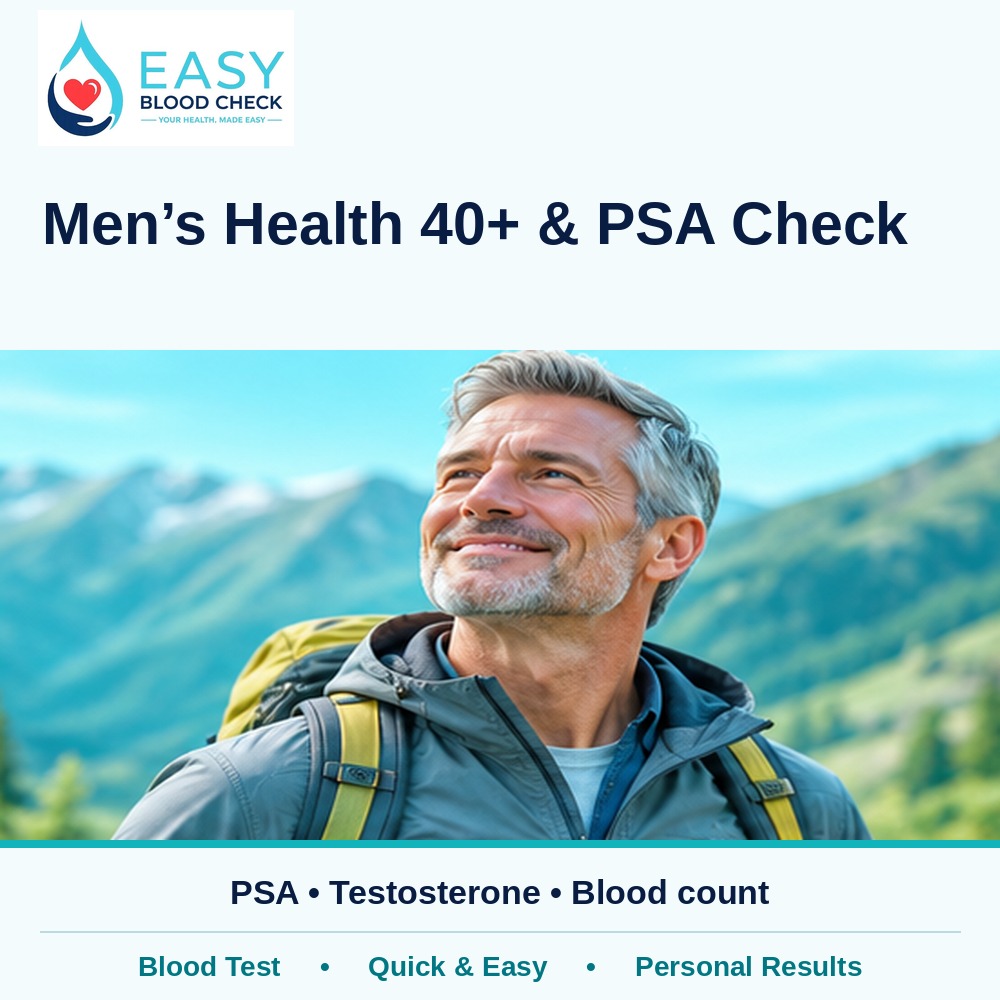
Combine a broad men’s health review with PSA.
Includes PSA and testosterone · Blood count, thyroid, iron and vitamins · Blood sugar, cholesterol and organ markers.
Depending on the test, sample collection may be Capillary, Venous, or available in both formats. The available method is shown above for this test.
Please read the test information carefully before ordering. This product is not intended to replace medical advice.
Test details
Combine a broad men’s health review with PSA.
If you are a man aged 40 or over arranging a broader health review, this panel includes cholesterol, blood sugar, thyroid and testosterone alongside a blood count and organ function markers. It also includes PSA, which distinguishes it from the Well Man Check. If you have a prostate, discuss the benefits and limits of PSA testing with your GP before deciding whether this option suits you.
This profile adds PSA to a wider set of health markers. If your only question is about PSA and you have discussed testing with your GP, the standalone PSA test is more focused.
| Thyroid-stimulating hormone (TSH) | The pituitary gland sends this signal to regulate how much hormone the thyroid makes. |
|---|---|
| Free thyroxine (FT4) | Measures the unbound form of the main hormone released by the thyroid. |
| Free triiodothyronine (FT3) | Measures the unbound, active thyroid hormone that helps regulate energy use. |
| High-sensitivity C-reactive protein (hs-CRP) | Detects low levels of a protein that rises with inflammation. Many factors can affect it. |
| Creatine | A compound that helps muscles store and supply energy. |
| Creatine kinase (CK) | Measures an enzyme released from muscle. Exercise or muscle injury can raise the level. |
| Folate | Measures vitamin B9, needed for cell division and red blood cell formation. |
| Full blood count | Examines red cells and haemoglobin, which carry oxygen, white cells involved in immunity, and platelets, which help blood clot. |
| HbA1c | Measures the proportion of haemoglobin with glucose attached, reflecting average blood sugar over roughly two to three months. |
| Ferritin | Reflects stored iron. Inflammation can also raise the result. |
| Serum iron | Measures the iron circulating on transport proteins at the time of sampling. |
| Total iron-binding capacity (TIBC) | Estimates the total amount of iron the blood’s transport proteins can carry. |
| Transferrin saturation | Shows the percentage of available iron-carrying sites occupied by iron. |
| Unsaturated iron-binding capacity (UIBC) | Measures the remaining capacity of blood proteins to carry iron. |
| Creatinine | A waste product from muscle metabolism used to assess kidney filtration. |
| Estimated glomerular filtration rate (eGFR) | A calculated estimate of how effectively the kidneys filter blood. |
| Urea | A waste product of protein breakdown cleared by the kidneys. Hydration can also affect the level. |
| Total cholesterol | Measures cholesterol across the different particles that carry it in the blood. |
| HDL cholesterol | Measures cholesterol carried by HDL particles, which help return cholesterol to the liver. |
| HDL percentage of total cholesterol | Shows how much of total cholesterol is carried by HDL particles. |
| LDL cholesterol | Measures cholesterol carried by LDL particles. Higher levels are associated with a greater risk of plaque building up in arteries. |
| Non-HDL cholesterol | Total cholesterol minus HDL cholesterol, covering several types of particles linked to plaque build-up. |
| Triglycerides | Measures a circulating fat the body uses for energy. |
| Alanine aminotransferase (ALT) | An enzyme found mainly in liver cells that can rise when these cells are injured. |
| Albumin | Measures a protein made by the liver that carries substances in the blood and helps maintain fluid balance. |
| Alkaline phosphatase (ALP) | An enzyme found in bile ducts and bone. Other results help identify the source of a change. |
| Aspartate aminotransferase (AST) | An enzyme found in liver and muscle cells that can rise with injury to either tissue. |
| Bilirubin | Measures a pigment produced when red cells break down and normally processed by the liver. |
| Gamma-glutamyl transferase (GGT) | An enzyme used alongside other results to assess the liver and bile ducts. |
| Globulin | Measures a group of proteins involved in transport and immune function. |
| Total protein | Measures albumin and globulins together to give an overall blood protein level. |
| Magnesium | Measures a mineral involved in nerve signalling, muscle function and energy use. |
| Total testosterone | Measures testosterone circulating in the blood, including testosterone bound to proteins. |
| Uric acid | Measures a waste product of purine breakdown that can form crystals when levels stay high. |
| Total prostate-specific antigen (PSA) | Measures a protein made by the prostate. Several prostate conditions can raise it, so the result needs clinical interpretation. |
| Vitamin profile | This panel also includes vitamin testing. |
Three simple steps
Select the health check that best suits the information you want to understand.
Follow the collection instructions for your test. Depending on the product, this may be a capillary finger-prick sample or a venous blood draw.
Once your sample has been analysed, access your results securely online.
Our team can help you find the most suitable option before you place your order.
Finger-prick or venous collection
Add to cart
Finger-prick or venous collection
Add to cart
Finger-prick or venous collection
Add to cart
Venous collection
Add to cart
Finger-prick or venous collection
Add to cart
Venous collection
Add to cart
Reviews
There are no reviews yet.